

Time for summing up!
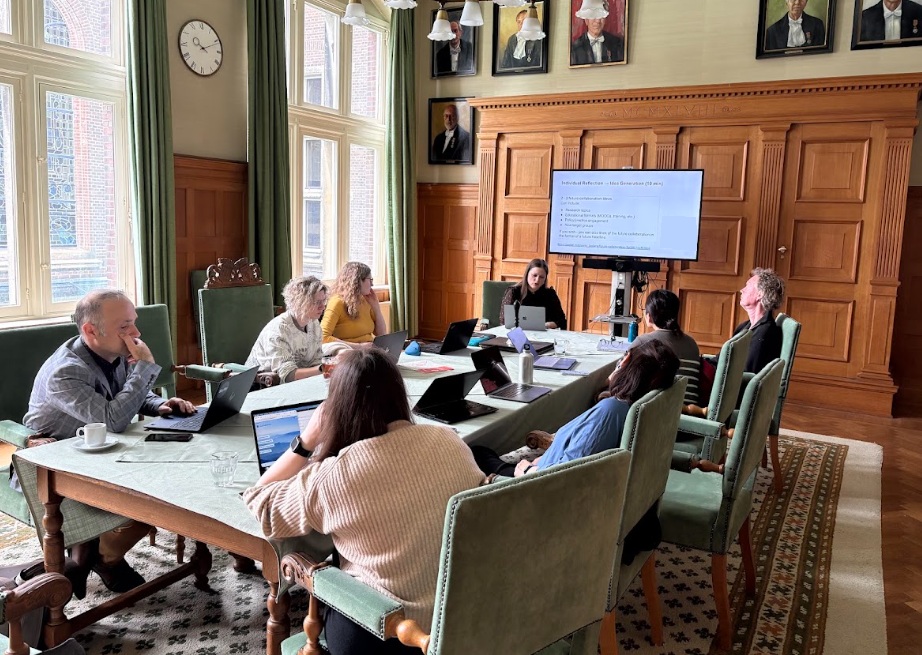
Time for summing up! We’ve just submitted our final report and we’re really proud of what’ve managed to do within the last 27 months. It’s actually hard to believe that it was less than three years ago when we met in Warsaw for the kick-off meeting.
And here’s how we see the project (5000 characters):
BACKGROUND:
Growing social polarisation around complex challenges (climate change, migration, public health) poses a severe threat to democratic resilience, replacing constructive dialogue with hostility and “echo chambers.” Citizens and students often lack the tools to navigate these socio-cognitive biases. To address this, the project targeted the urgent need for innovative, evidence-based educational frameworks that foster critical thinking, empathy, and open dialogue.
By leveraging agent-based simulation models of opinion dynamics, we addressed the lack of accessible, immersive tools capable of translating complex sociological research into practical skills. The project fulfilled the need for high-quality digital resources for higher education and secondary schools by developing a game-based workshop, a FutureLearn MOOC, and Moodle courses. This approach equipped young people and educators with the competence to act as “bridge builders,” safeguarding democratic values.
The primary objective of the project was to develop innovative high-quality educational formats that help (young) people better understand and deal with polarisation. At the methodological core of this strategy was to design and implement 1) a comprehensive, engaging MOOC on polarisation and dialogue that would be available at an open platform for a general audience together with an extended version that would be tailored for the Moodle platforms of University of Tartu and University of Warsaw and 2) a professional game-based workshop on polarisation mechanisms, based on agent-based models of opinion dynamics, including a social simulation of the process of growing divides. We also wanted all the results to be scalable, so we aimed at creating Open Educational Resources (OER) that would help academic teachers and educators use the tools created within the project.
AIMS:
The primary objective of the project was to develop innovative high-quality educational formats that help (young) people better understand and deal with polarisation. At the methodological core of this strategy was to design and implement 1) a comprehensive, engaging MOOC on polarisation and dialogue that would be available at an open platform for a general audience together with an extended version that would be tailored for the Moodle platforms of University of Tartu and University of Warsaw and 2) a professional game-based workshop on polarisation mechanisms, based on agent-based models of opinion dynamics, including a social simulation of the process of growing divides. We also wanted all the results to be scalable, so we aimed at creating Open Educational Resources (OER) that would help academic teachers and educators use the tools created within the project.
ACTIVITIES:
To achieve our objectives, we implemented a comprehensive set of interconnected activities. Firstly, we designed and launched a dedicated MOOC on polarisation and dialogue, first at the Futurelearn platform, and then, an extended version was tailored to the Moodle platforms of University of Tartu and University of Warsaw.
Secondly, we designed and executed professional game-based workshops focused on polarisation mechanisms. The format was based on advanced agent-based models of opinion dynamics, designed and improved in an iterative way, using a Design Thinking methodology.
Thirdly, we widely promoted our innovative educational tools across academia, showcasing them at 22 scientific events, including dedicated educational workshops for academic teachers. We also produced accessible Open Educational Resources (OERs) for teachers. Finally, the project drove intersectoral cooperation by bridging 4 higher education institutions and reaching 8 secondary schools. All ACTIPLEX educational tools are available at the dedicated website: socialpolarisation.eu.
RESULTS:
The project exceeded most quantitative targets, delivering high-quality, sustainable educational tools. We produced a MOOC “Growing apart: What is polarisation and what we can do about it” launched first on Futurelearn and then on the Moodle platforms of University of Tartu and University of Warsaw, including 30 educational videos, 80 texts, 80 quizzes, and 10 simulation exercises. The educational impact is extensive: the FutureLearn MOOC attracted over 650 diverse international learners (97% satisfaction), while the Moodle versions at Tartu and Warsaw universities doubled estimated targets, reaching over 500 students (99% satisfaction, 93% knowledge increase).
We developed the ActIPLEx game-based workshop, using intensive prototyping and testing in line with the Design Thinking approach, conducted workshops with 257 university students and 207 secondary school students that helped them experience and understand polarisation dynamics.
We produced accessible OERs with educational tools about polarisation, promoted them at over 20 scientific events, including trainings for 66 academic teachers. We achieved high visibility with a professional website in 4 language versions, active social media outreach, and international conferences.